
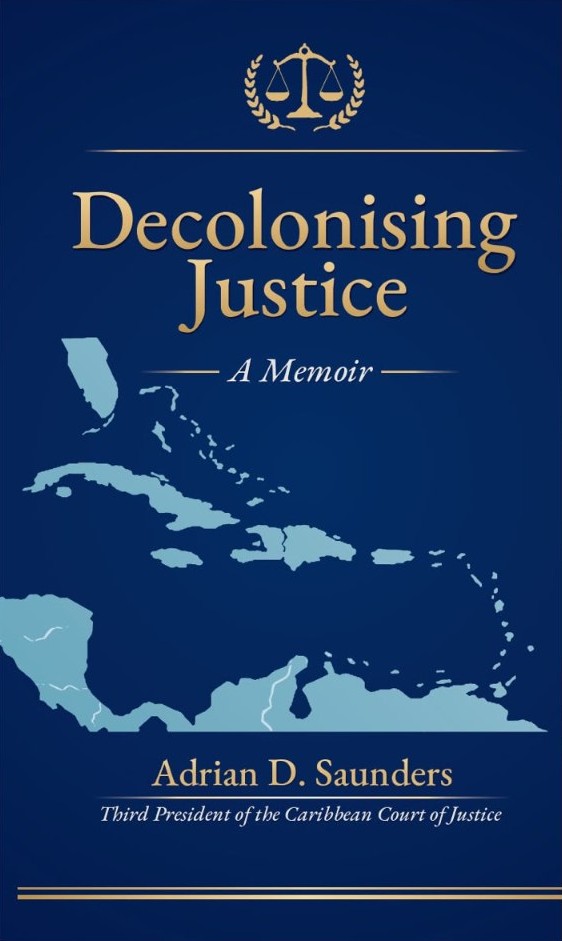
A Memoir
Third President of the Caribbean Court of Justice
For almost thirty years Adrian Saunders judged the Caribbean; sitting in all nine states and territories of the Eastern Caribbean Supreme Court. Then for two decades he served as a judge at the Caribbean Court of Justice (CCJ), the last seven as its third President.
This is not the autobiography of that career, and it is better for it. He never meant to read law: a resident tutor noticed the blank field on his scholarship application form, suggested it, and he shrugged and said, “okay, let’s put that down.” What follows is a book of stories: the client who believed he was a world banker, the murder brief, the Soufrière Hills erupting in the dark outside a Montserrat cabana, the pen and notepad kept by the bedside that caught the line now quoted across the region: “Difference is as natural as breathing.”
It is also an argument, pressed hard. Independence remains unfinished, Saunders contends, so long as Caribbean justice stays in thrall to colonial laws, colonial precedents and the colonial method. Replacing the Judicial Committee of the Privy Council with the CCJ was necessary, but it is not sufficient. Decolonising justice, he insists, “is not a rhetorical slogan. It is a jurisprudential, institutional, and methodological project.”
Behind both is a debt: to a father who led the country’s first teachers’ strike in 1954, the year his last son was born, and was banished to a rural school for it, and to a mother whose variety shop in Kingstown never turned a profit because it was really an almshouse.
Purchase This Book
Decolonising Justice is available on Amazon.
Book details
Introduction by Peter Jamadar
This publication by Adrian Saunders is a mixture of biography, history, insight and ideology, expertly woven together in an entrancing and engaging work that testifies to Adrian’s deep love for and commitment to Caribbean justice and regionalism. Typically diplomatic, it is nevertheless fiercely forthright in recounting his experiences and deep beliefs, rooted in a career life story of reflection and purpose.
Adrian’s memoir shares stories, reflections, insights and experiences that focus on his near-thirty-year judicial career, including his seven years as President of the Caribbean Court of Justice (which ended in June 2025). It includes his musings on and actions around one of the main ideological driveshafts of his legal and judicial career, the project of decolonising Caribbean justice.
To contextualise this telling of a Caribbean judicial life, Adrian offers us insights into meaningful events that shaped and influenced the formative stages of his legal career: from marching through the streets of Bridgetown in 1974 in solidarity with African liberation movements, listening to Walter Rodney at the Barbados Workers Union Hall, and meeting with Bob Marley in Jamaica, to the influences of his parents and lecturers. It is an engrossing narrative.
Peter Jamadar
Judge of the Caribbean Court of Justice
Expert perspectives
Perspectives on Decolonising Justice
Madan B. Lokur
Judge of the Supreme Court of India (Ret’d)
This is a fascinating memoir of a young man who had no idea which course to study in college. On the suggestion of his resident tutor and good friend of his father, he wrote “Law” for want of a better decision. His karma favoured him and a reluctant law student eventually rose to become an internationally recognised eminent jurist and President of the Caribbean Court of Justice.
Hilary Phillips
Justice of Appeal of Jamaica (Ret’d)
A moving, thoughtful, inspirational text, describing a journey so worthwhile, yet intimate; a powerful tale of an evolving Caribbean legal landscape told through the discerning eyes, and compelling voice of a brilliant, eminent Caribbean Jurist, Adrian Saunders.
Roxane George
Acting Chancellor of the Judiciary of Guyana
Decolonising Justice chronicles not only the life of Justice Adrian Saunders, Retired President of the Caribbean Court of Justice, but unpretentiously captures the indelible contribution he has made to the legal profession, the development of the jurisprudence and ultimately the administration of justice in the Caribbean region. Justice Saunders frankly shares knowledge and experiences, narrating familial, social and legal history.
About the author
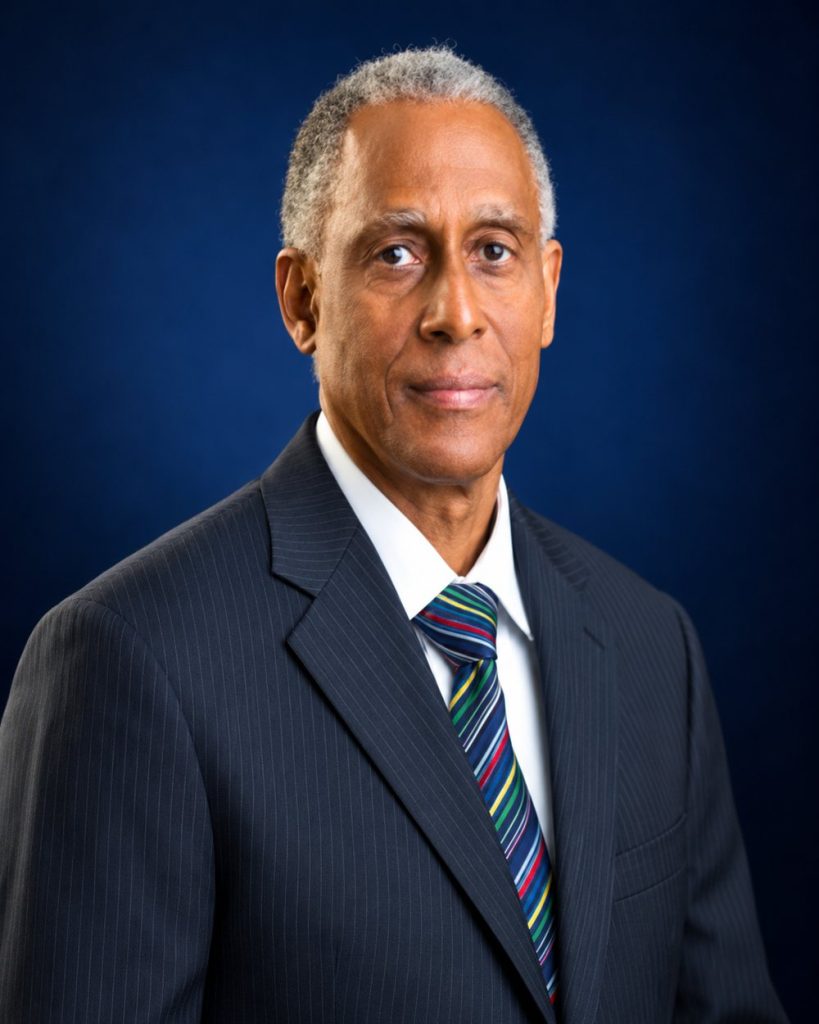
Adrian Saunders
Third President of the Caribbean Court of Justice
The bench came in 1996, first in Montserrat and Anguilla, then the Court of Appeal in 2003 and a spell as Acting Chief Justice. In 2005 he became one of the first judges of the Caribbean Court of Justice and served as its President from 2018 until his retirement in 2025.